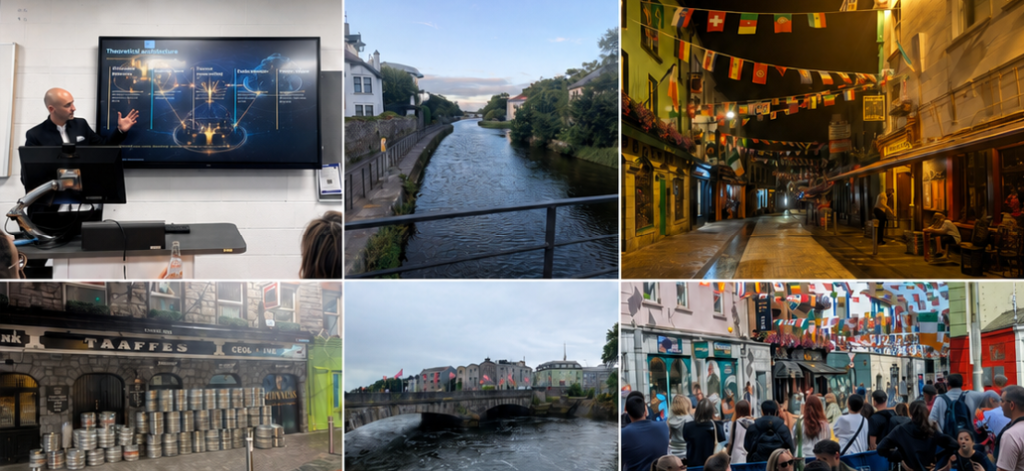
At the IAMCR 2026 Conference, held at the University of Galway, Ireland, under the theme “Peripheries and Connections: Media, Communication and Transformation”, I participated in two closely connected academic spaces that reflect the current direction of my research: the ethics of representation, the emotional dimension of journalism, and the responsibility of media and audiovisual professionals in contexts marked by vulnerability, platformisation and online hate. The conference took place from 28 June to 2 July 2026 and brought together international scholars working across media, communication and transformation.
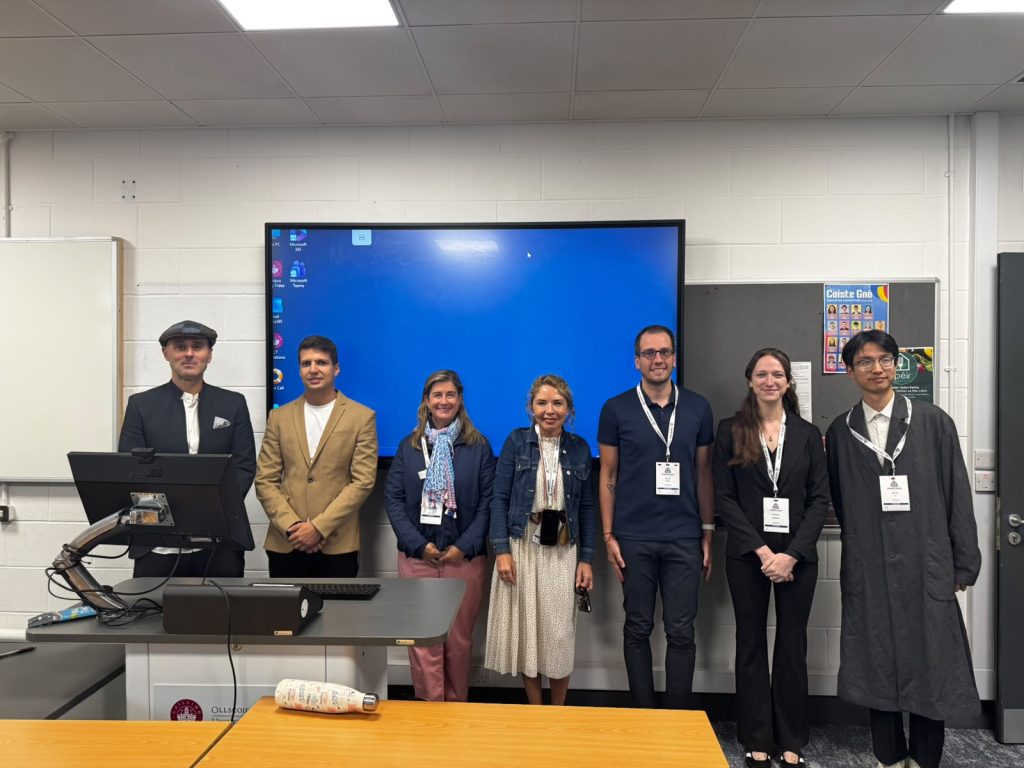
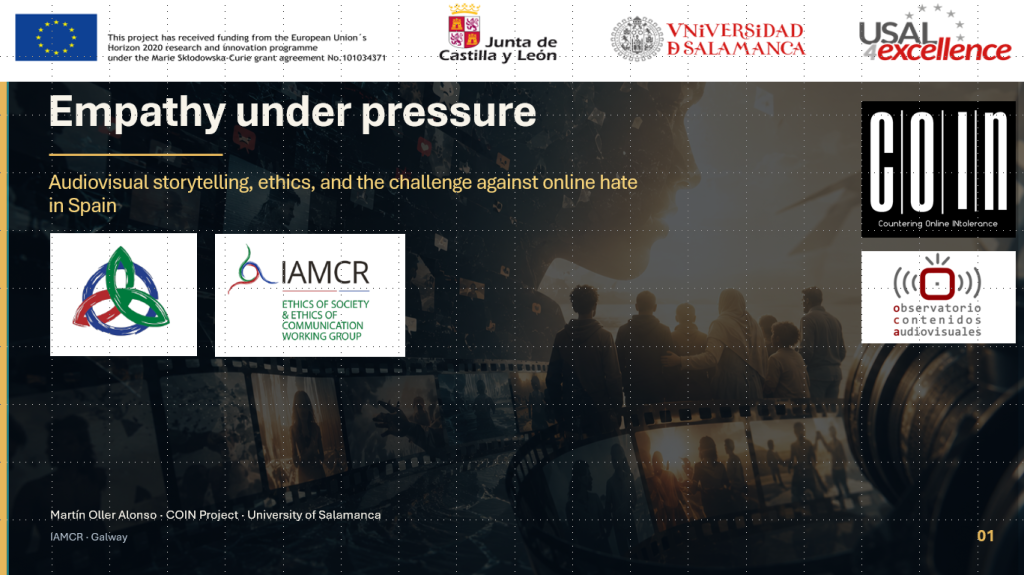
My first contribution was presented in the IAMCR ethics panel “ETH-Representing Harm: Vulnerability, Exploitation and Exposure”, held at the Arts Millennium Building. Together with Prof. Carlos Arcila Calderón, I presented the paper “Empathy under Pressure: Audiovisual Storytelling, Ethics, and the Challenge Against Online Hate in Spain.” The paper examines how Spanish audiovisual professionals understand their ethical responsibility when dealing with hate, vulnerability and representation in platformised media environments. Rather than treating empathy as a decorative emotional value, the study conceptualises it as a narrative, ethical and organisational practice that must be deliberately designed, sustained and protected under conditions of market pressure, digital visibility and reputational risk.
The presentation was based on the COIN Project at the University of Salamanca and drew on an empirical design combining five online focus groups with audiovisual professionals, ten semi-structured interviews, thematic analysis and corpus-linguistic procedures. The main argument was that the fight against online hate cannot rely only on detection, classification or moderation after harmful discourse has circulated. It also requires attention to the production process itself: how stories are imagined, scripted, filmed, edited, distributed and justified. In this sense, audiovisual storytelling becomes an ethical infrastructure where consent, verification, contextualisation, non-sensationalisation and harm mitigation are not secondary concerns, but central professional obligations.
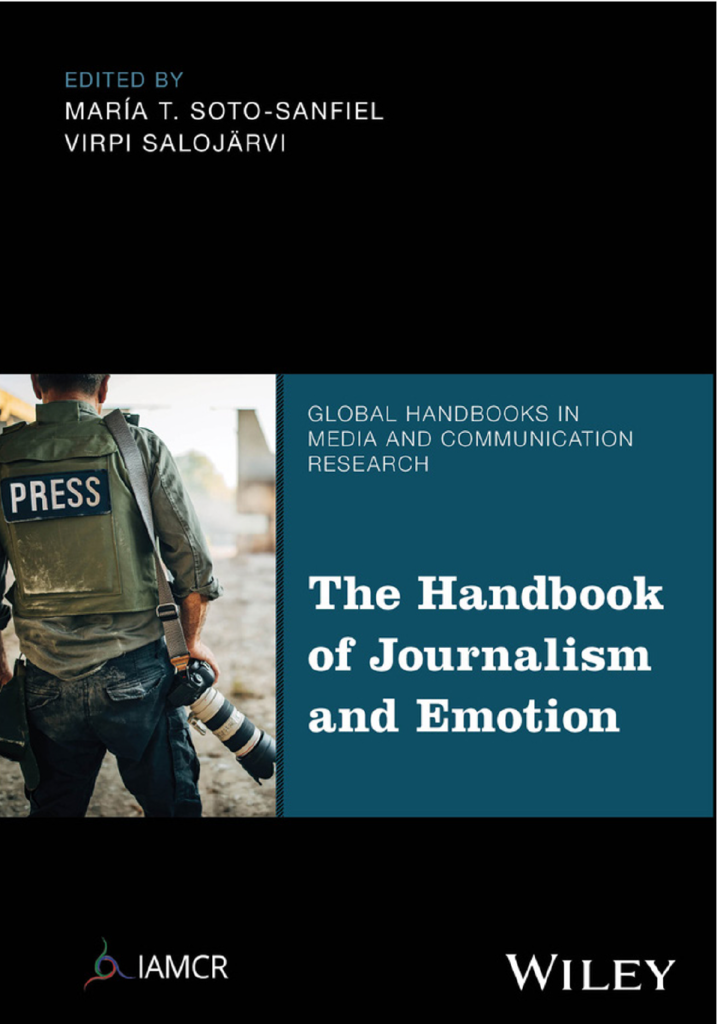
The second space was linked to the pre-conference and book presentation around The Handbook of Journalism and Emotion, edited by María T. Soto-Sanfiel and Virpi Salojärvi and published by Wiley. My contribution to the volume, “Decolonizing Journalism in Ibero-America and the Caribbean: Embracing Emotional Dimensions and Well-Being in a Transformative and Critical Media Landscape,” extends my work on comparative journalism, decoloniality and the Global South by placing emotion, well-being and deliberative communication at the centre of the debate. The chapter argues that journalism in Ibero-America and the Caribbean cannot be fully understood through dominant Northern frameworks alone; it must also be approached through its affective, historical, cultural and political conditions.
both interventions allowed me to connect two lines of work that are often treated separately: the ethics of audiovisual representation in the face of online hate and the emotional/decolonial rethinking of journalism in peripheral and semi-peripheral contexts. In both cases, the core question is not only what media represent, but how they produce visibility, vulnerability and recognition. IAMCR 2026 offered a particularly relevant setting for this discussion, since the conference theme invited us to rethink the relation between centres and peripheries, between technological transformation and social responsibility, and between communication research and the lived conditions of those whose voices are too often marginalised.