I was in Antwerp as a representative of the COIN research team. We took part in the fifth – and final – training conference of the European Observatory of Online Hate (EOOH), held in Antwerp (Belgium) and hosted by the Violence Prevention Network gGmbH (VPN). The event brought together more than 45 representatives from politics, civil society, academia and law enforcement, representing 41 organisations from 15 EU Member States, for two intense days of peer learning and joint reflection on how to respond more effectively to online hate.

EOOH is an EU-funded initiative that combines transparent AI technologies with expert analysis to monitor and classify online hate speech across all EU languages (plus Arabic and Russian), offering a shared dashboard for national stakeholders working on hate speech, extremism, and digital regulation. The project builds on previous EU programmes on rights, equality and citizenship. It is closely aligned with the Digital Services Act, which calls for stronger cooperation between platforms, digital services coordinators, law enforcement agencies and civil society.
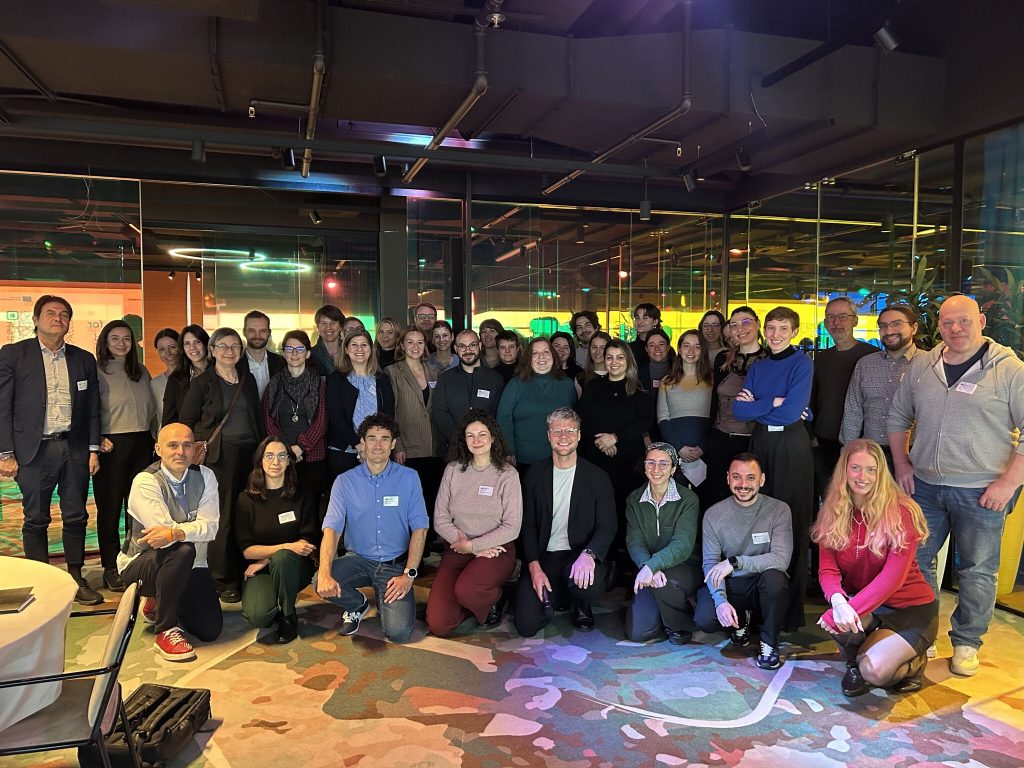
A training focused on collaboration, not only tools.
Beyond introducing the EOOH dashboard and its analytical capabilities, the Antwerp training was designed as a space for relationship-building. Sessions such as “Addressing Online Hate – Peer Learning” and the “Collaboration Lab” invited participants to share concrete cases, map existing response pathways and identify where cooperation between actors breaks down. The facilitation team from VPN – led by Rebecca Visser, Chloe Walsh, Ella Goldschmied and Chris Burdack – created an environment where practitioners could speak candidly about both successes and frustrations in their daily work.
What is blocking effective responses to online hate?
The round-table discussions highlighted several structural obstacles:
Legal and procedural gaps. Participants stressed the tension between clearly illegal hate speech and so-called “awful but lawful” content, as well as slow judicial processes, inconsistent platform standards and the opacity of encrypted spaces.
Operational constraints. Many organisations operate with limited funding, heavy workloads and fast-evolving hate vocabularies, often without sufficient training or mental-health support for staff who monitor traumatic content.
Trust and engagement deficits. Victims and communities frequently distrust institutions or lack the digital literacy needed to use reporting tools, which undermines reporting and follow-up.
Fragmented coordination. Nationally bounded mandates and weak feedback loops clash with the borderless nature of online platforms, making coherent cross-border responses difficult.
Emerging practices and recommendations
Despite these challenges, the Antwerp conversations also surfaced several promising approaches:
Victim-centred reporting pathways. In-person hate-crime desks, dedicated single points of contact (SPOCs) and early interventions in minor cases can increase reporting, support victims, and build confidence in institutions.
Prevention and public awareness. Education campaigns and visible enforcement actions help shift norms around online abuse and underline that online hate has offline consequences.
Professionalisation and shared expertise. Standardised evidence collection, specialised tools and closer collaboration with researchers improve the quality and comparability of monitoring.
Structured collaboration frameworks. Clear liaison roles between civil society and law enforcement, supported by DSA-related national structures, were seen as crucial, complemented by informal, trust-based channels that enable faster problem-solving.
Care for practitioners. Participants strongly emphasised the need for long-term funding, ongoing training and systematic psychological support for frontline staff to prevent burnout.
Responsible use of technology. AI tools such as EOOH can help triage content and support legal pre-assessment, but must remain embedded in human-centered workflows and transparent decision-making.
Why this matters for our research
For our research on online hate, AI governance and the protection of vulnerable groups in digital communication, the Antwerp training offered a unique vantage point on how technical infrastructures, legal frameworks and everyday professional practices intersect. The discussions about “awful but lawful” content, cross-border coordination and mental-health risks for monitors directly resonate with our ongoing work on hate-speech detection, narrative framing and safeguards during electoral campaigns.
We will continue to follow and engage with the EOOH community as it evolves from a time-limited project into a broader observatory ecosystem. For more information about EOOH and its activities, see the official project pages hosted by the Violence Prevention Network and the Observatory.
TIMES OF (SEMANTIC) WAR. Toxicity vs. Hate in a (dis)proportionate digital governance
We are immersed in a “war of meanings” in which toxicity and hate speech are conflated, producing a regime of digital governance that unevenly sanctions which voices are silenced, and which are tolerated (Martín Oller Alonso, 2025).
On social media, we often confuse shouting (of hate) with the (toxic) wounds. Foul language is visible, countable, and punishable. That has been obvious for a long time. Yet “truthful hatred” – the kind that dehumanises, negates collective rights, and sows long-lasting fears – has learned to disguise itself better than Mortadelo in the iconic comic strips of the great Francisco Ibáñez. This is the (most) uncomfortable lesson emerging from our computational analysis of 798,619 Spanish-language posts, geolocated in Spain (whenever possible), published between 1 April and 13 August 2024 on X, Facebook, Instagram and TikTok. The upshot? Linguistic “toxicity” and targeted “hate” are not the same thing, and the way they align varies (radically) depending on the platform and on the (stigmatised and/or vulnerable) community at which they are directed (Jews, Muslims, Roma, migrants and the LGBTI community).
This study, stemming from the COIN project[1], starts where any responsible measurement must begin [yes, researchers are bound by a commitment and a responsibility to our society/ies]: by precisely defining the object (and the subject). Antisemitism, just like Islamophobia, is not a joker (nor an ace up the sleeve). It is a modern/ist ideology, with a nineteenth-century genealogy, distinct from religious Judeophobia and irreducible to ethnic labels (“Semitic”). Hence, there is a need to distinguish between terms and concepts. In this “swarm” of disinformation, polarization and extremism (both digital and physical), our duty/ies consist(s) in avoiding retrospective projections that simply justify our (academic/scientific) proposal, and instead in creating a historical-operational codebook capable of turning theory/ies and soft law into observable, tangible and, crucially, applicable rules. In this era – more so given the immediacy, speed and dissemination capacity of messages – we must separate hate from legitimate political/ideological criticism concerning Israel/Gaza–Palestine. That is why, for our study, we triangulate between the definitions of antisemitism proposed by the International Holocaust Remembrance Alliance (IHRA), the Nexus Task Force (Nexus) and the Jerusalem Declaration on Antisemitism (JDA), and our empirical fieldwork. What emerges from this triangulation? A duality (and a question): Any kind of conspiracy narrative about “Jewish power”, double loyalty, collective blame, denial or trivialization of the Shoah, denial of the Jewish people’s right to exist, or dehumanizing Nazi analogies DOES COUNT as antisemitism. By the same token, however, factual criticism of Israeli policies, support for Palestinian rights, or endorsement of non-violent strategies such as boycott, divestment and sanctions (BDS), when not infused with stereotypes, DOES NOT, in and of itself, qualify as antisemitism. So why should we not exercise our legitimate right to freedom of expression and critical scrutiny toward policies or acts of aggression with which we disagree? That is not hate; it is determination. In parallel, antisemitism cannot be adequately understood if we do not operationalize anti-Islamism/Islamophobia in line with the Organization for Security and Co-operation in Europe (OSCE), the Office for Democratic Institutions and Human Rights (ODIHR) and the European Commission against Racism and Intolerance (ECRI).
On the basis of this theoretical, empirical, historical and legal scaffolding, we combine six attributes from the Perspective API (toxicity, severe toxicity, insults, profanity, identity attacks and threats) with multilingual BERT classifiers by group (antisemitism, F1 = 0.89; α = 0.79; Islamophobia, F1 = 0.86), trained on a corpus annotated with positive/negative rules derived from the IHRA–Nexus–JDA framework. The result is an auditable pipeline — from conceptual genealogy through to prediction — that reduces false positives in the face of harsh criticism and detects implicit forms of hostility.
What does (all) this mean?
Quite simply, the data from our research is uncomfortable. Beyond the platform X, “toxicity” and “hate” scarcely even intersect. For antisemitism, r = .32 on X; −.02 on Facebook; .20 on Instagram; .04 on TikTok. For Islamophobia: .28, .14, .11 and .04, respectively (p < .01, except for coefficients close to zero). Translation: Facebook and TikTok display high probabilities of hate with a low lexical signal; X concentrates the strongest “lexicon–hate” coupling; and Instagram remains comparatively low on both axes. In other words, the toxic core on social media orbits around the “insult–identity attack” dyad because of its high stability (e.g., toxicity–insult r = .98 on X). Even so, while this result is helpful as a signal, it is still insufficient as a “compass”.
But are all the “blows” (attacks) directed at Jews? No. Antisemitism (and hate) is far more complex. Indeed, the “intersectionality of contempt” toward the “other” makes the analytical picture even more acute. Only 2.5% of the corpus under study mentions ≥ 2 of the main vulnerable/stigmatized groups in Spain (with a peak of 4.5% on X and 1.1% on TikTok). I mean, co-mentions (the practice of “going after everyone indiscriminately”) increase toxicity (d ≈ 0.40) and, on X, also boost diffusion (more comments and more interaction). Yes, X is the best example of how NOT manage/arrange a social media platform since Elon Musk became its principal shareholder in April 2022. Will Facebook and Instagram meet the same fate after Meta discontinues using independent fact-checkers on these platforms as of January 2025? We are working on it…
Why is our study so crucial? Because the Islam+Judaism combination is the most frequent/recurrent pairing in hateful and/or toxic messages in our research. This suggests (indeed, it shouts, as we said at the beginning) that transfers/hybridizations of hate between minorities (ethnic, religious, identity-based…) are excellent detectors of intersectionality, not merely of lexicographic thresholds.
Context matters. In case there were any lingering doubts… the Israel–Gaza conflict (if it can even be called that, rather than an outright genocide against the Palestinian people) acts as a catalyst for spikes of hostility on social media, mainly when (anti-)Zionism functions as a vector dragging along classic tropes (double loyalty, denial of collective rights, blaming the diaspora, Nazi analogies). It is precisely here that the IHRA/Nexus/JDA framework allows us to distinguish clearly between legitimate dissent and hate. Zionism is not the same as Judaism, as thousands of social media users insist (and as our results corroborate). The political consequences of getting this wrong — of our getting this wrong — are well known: (self)censorship and blind spots in which dehumanization flourishes.
Are we 100% sure of what we research, publish, and claim? Not everything is sure. Multimodality introduces under-detections (audio, images, memes); API restrictions skew many temporal windows (what a lucrative business model the major platforms have built on the backs of researchers who need access to their data!); and, of course, irony and dog whistles (“coded messages”, implicit hate) continue to challenge any classifier. Our agenda is clear: we need to draw on Automatic Speech Recognition (ASR) (to transcribe audio/video) and Optical Character Recognition (OCR) (to extract text from visual material), as well as on multimodal models, longer time series, platform-specific cost/error assessments, multilingual extension, and open observatories with public codebooks. It sounds complex — and it is. Today, more than ever, governing without measurement is ideology. And measuring badly is ideology, too.
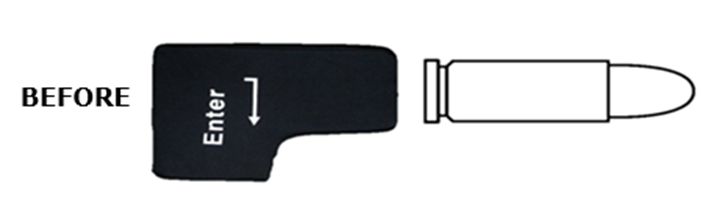
In a Europe shaken by conflicts that do (not) end on the screen and by algorithms that reward military escalation(s), the point is not to silence dispute — it is to demarcate wounds (toxic ones) based on verifiable criteria. Demonstrating that “toxicity ≠ hate” is an invitation to recalibrate how we moderate, inform, deliberate and research. If today’s hate travels via euphemisms, insinuations and conspiratorial frames — with low toxicity and high harm — our response must be up to the task: we must build public frameworks, “auditable” models and safeguards for political criticism that does not slide into hate attacks or toxic messaging. Extinguish or ignite the fuse? We live in an age in which ENTER has turned into a TRIGGER. Time to reflect… and to act.
Martín Oller Alonso, University of Salamanca
[1] Project funded by the EU. Marie Skłodowska-Curie Actions – H2020-MSCA-COFUND-2020- USAL4EXCELLENCE- PROOPI-663. Grant agreement number: 101034371. USAL internal reference: 8925-8553.